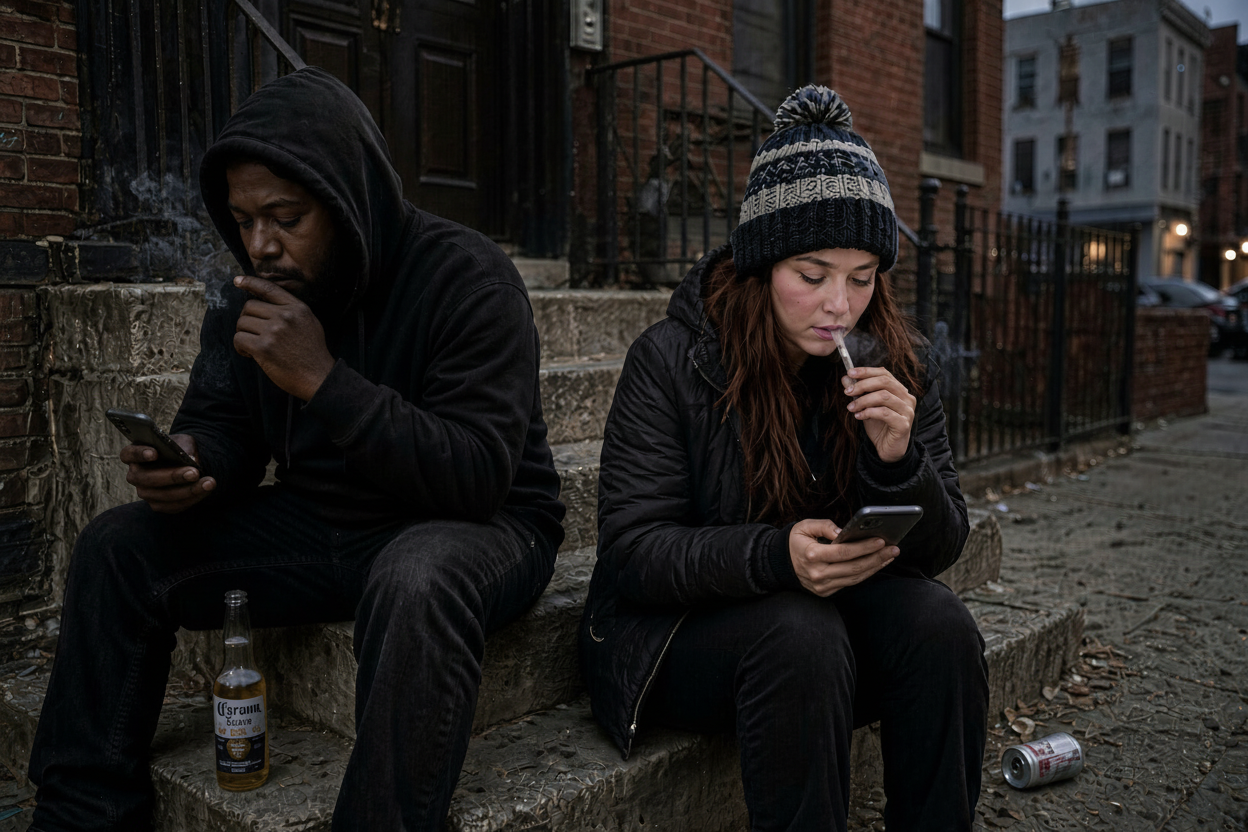
"I have discovered that the key to living a good life is to practice moderation in the good things and abstinence in the bad." — Kurt Bravata, M.D., Live Free or Diet
Marijuana: Not as Safe as It Seems
"Due to hybrid growing practices, the THC content of marijuana is often tenfold what it was in the 1970s. This means that the risk of cognitive impairment, toxicity, negative side effects, and addiction is approximately ten times greater."
Opioids
"If you or a loved one is suffering from opioid use disorder (OUD), there is help! Medications for addiction treatment (MAT), like naltrexone, buprenorphine, and methadone can save lives."
Social Media: Antisocial by Design
"I call it antisocial media, because really that is what it is, given how it has further divided society… people have become more isolated, siloed, and antisocial in the real world."
The feed is built to fragment attention and reward outrage. Isolation then feels like connection because the phone is always answering. If you cannot sit through a meal, a prayer, or a child's story without checking, that is not a personality quirk. It is a habit loop. Filters, time limits, and leaving the phone in another room are not small. They are how you take the first hour of your life back.
Pornography belongs in the same family of compulsive use for many people — secrecy, escalation, numbness in real relationship. I wrote about that elsewhere; the recovery tools overlap: light, accountability, and a replacement for the ritual, not only raw willpower at midnight.
The Path Forward
Recovery is rarely one insight. It is usually:
- Tell the truth to one safe person
- Get a medical evaluation (withdrawal from alcohol or benzodiazepines can be dangerous and should not be improvised)
- Use indicated medication when the diagnosis calls for it
- Rebuild sleep, meals, movement, and worship or meaning
- Change the cues — people, places, phones — that start the loop
- Stay in a community that will notice if you disappear
You do not have to feel ready. You have to take the next honest step.
Help Is Available
- SAMHSA National Helpline: 1-800-662-HELP (4357)
- Suicide & Crisis Lifeline: 988
- American Society of Addiction Medicine: [asam.org](https://www.asam.org/publications-resources/patient-resources)
If you are in immediate danger, call 911.
Educational only. Not a substitute for personal medical care. If you are considering stopping alcohol or sedatives, talk to a clinician first — sudden withdrawal can be medically serious.